
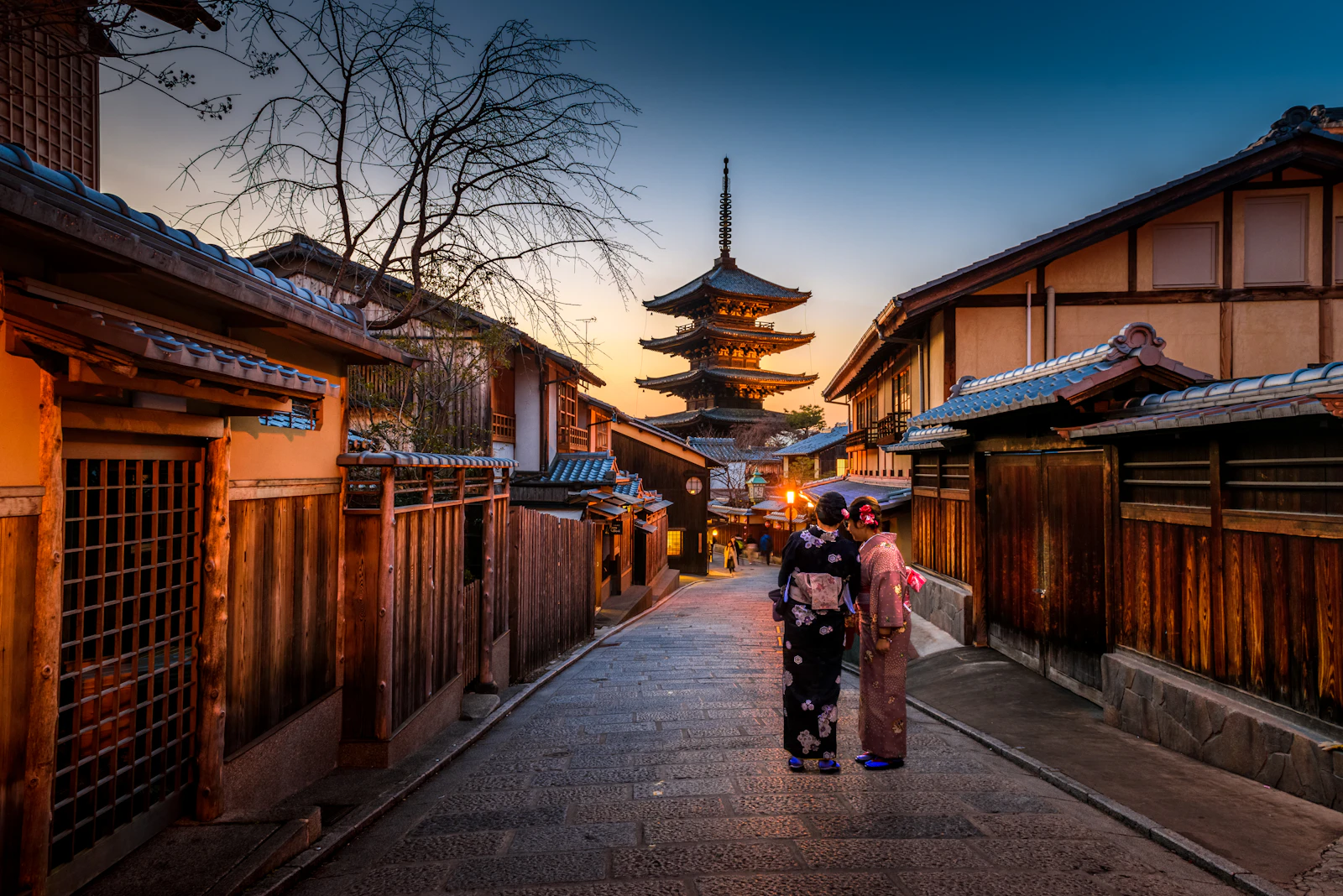
Kyoto: Cultural Heart of Nippon
Japan•KansaiStation Code: KYO⛰️55 m (180 ft)

Kyoto: Cultural Heart of Nippon

Where high-speed futuristic rail intersects 1,200 years of Zen temples, matcha tea houses, and geisha traditions.

Primary Hub: Kyoto Grand Station (JR West / Shinkansen)
Optimal Season: Late March to mid-April for ethereal cherry blossoms
Annual Visitors: 53.5 Million

City Profile & Rail Arrival Experience

What to expect when disembarking at Kyoto Grand Station

For over a millennium the imperial capital of Japan (originally founded as Heian-kyo in 794 AD), Kyoto remains the cultural soul of the Japanese archipelago. Spared from extensive aerial bombardment during World War II, the city houses more than 2,000 Buddhist temples and Shinto shrines, 17 UNESCO World Heritage monuments, and exquisitely preserved geisha districts like Gion and Miyagawacho. The contrast between stepping off a supersonic 300 km/h Shinkansen bullet train into Kyoto’s towering futuristic steel station and wandering into a moss-carpeted bamboo grove 20 minutes later is unmatched anywhere in the world.

Station Architecture & Historical Heritage

Kyoto Grand Station (JR West / Shinkansen)

Kyoto was engineered on a strict geomantic grid pattern modeled after the Tang dynasty capital of Chang'an (modern-day Xi'an). Shielded by mountains on three sides and flanked by the serene Kamo River, it fostered the refinement of traditional Japanese arts: the tea ceremony (Chado), flower arrangement (Ikebana), Noh theater, and the delicate multi-course Kaiseki cuisine. When the capital officially moved to Tokyo in 1869, Kyoto reinvented itself through advanced higher education, artisanal crafts, and cutting-edge environmental conservation.

Architectural & Civil Engineering Notes

Designed by renowned modernist architect Hiroshi Hara and completed in 1997 for Kyoto's 1,200th anniversary, Kyoto Station is a breathtaking monument to 21st-century deconstructivist glass and lattice steel. Rising 15 stories with a massive 60-meter-high open canyon atrium, the building features the iconic 'Grand Stairway' of 171 steps illuminated by thousands of LED lights, a skyway tunnel with aerial vistas over Kyoto Tower, and seamless subterranean shopping concourses.

Landmarks Accessible Direct From The Platforms

Walk straight out of the station concourse into world-renowned cultural monuments without airport transfers.

Fushimi Inari Taisha

5 min train ride on JR Nara Line from Kyoto Station

The iconic sanctuary dedicated to the Shinto deity of agriculture and business, famous for its mesmerizing mountain path of over 10,000 crimson torii gates.

Kinkaku-ji (The Golden Pavilion)

35 min direct city bus #205 from Station North Plaza

A Zen Buddhist temple whose top two stories are entirely covered in pure gold leaf, reflected gracefully in the surrounding Mirror Pond (Kyoko-chi).

Arashiyama Bamboo Grove & Tenryu-ji

16 min on JR Sagano Line to Saga-Arashiyama

A mystical emerald walkway of towering green bamboo stalks that whisper in the breeze, adjacent to a 14th-century UNESCO Zen landscape garden.

Local Transit & Intermodal Connections

Metro, suburban rail, electric buses, trams, and ferries

Kyoto Station is the central nexus of Kansai travel. JR trains handle suburban and intercity bullet routes. For navigating the inner city, the Karasuma and Tozai subway lines combined with the extensive municipal bus system reach every historical site. You can tap seamlessly using any prepaid IC card (Suica, Pasmo, Icoca) across all turnstiles and bus fare boxes.

Trainglimps Station Dispatcher Field Advice

  • Purchase a JR Kansai Area Pass or use digital Suica/Icoca on Apple Wallet for frictionless platform taps.
  • Visit Fushimi Inari at 06:30 AM before tour crowds arrive; the mountain trails remain open 24 hours.
  • Explore the basement food floors (Depachika) inside Isetan Department Store located within the station for exceptional gourmet bento boxes.